Corn
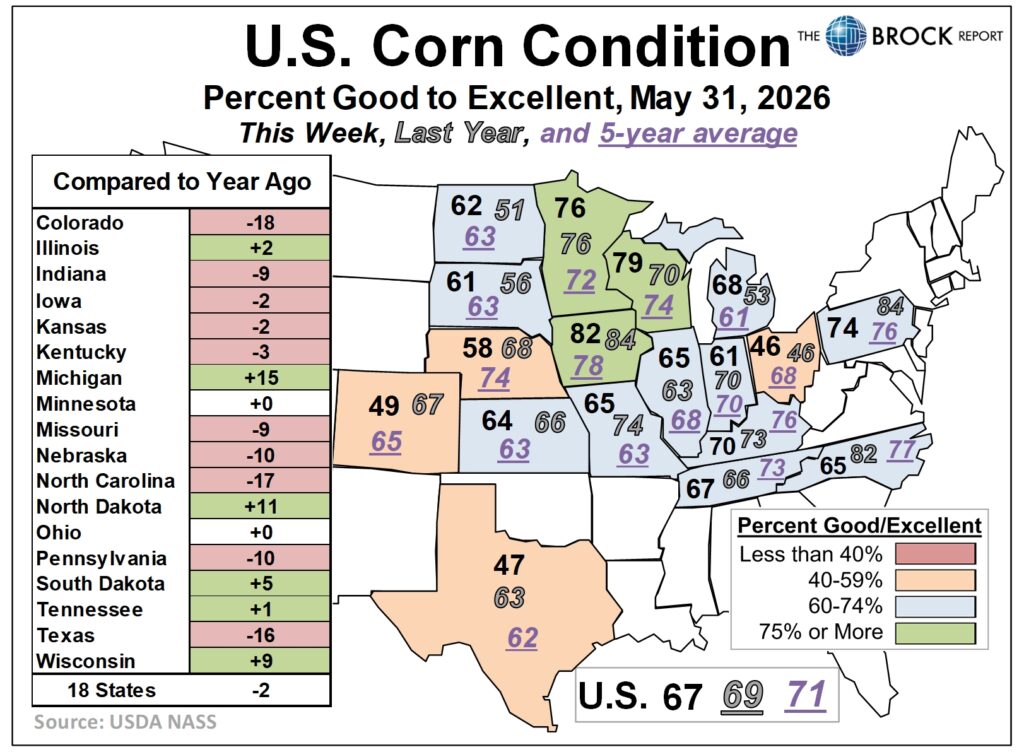
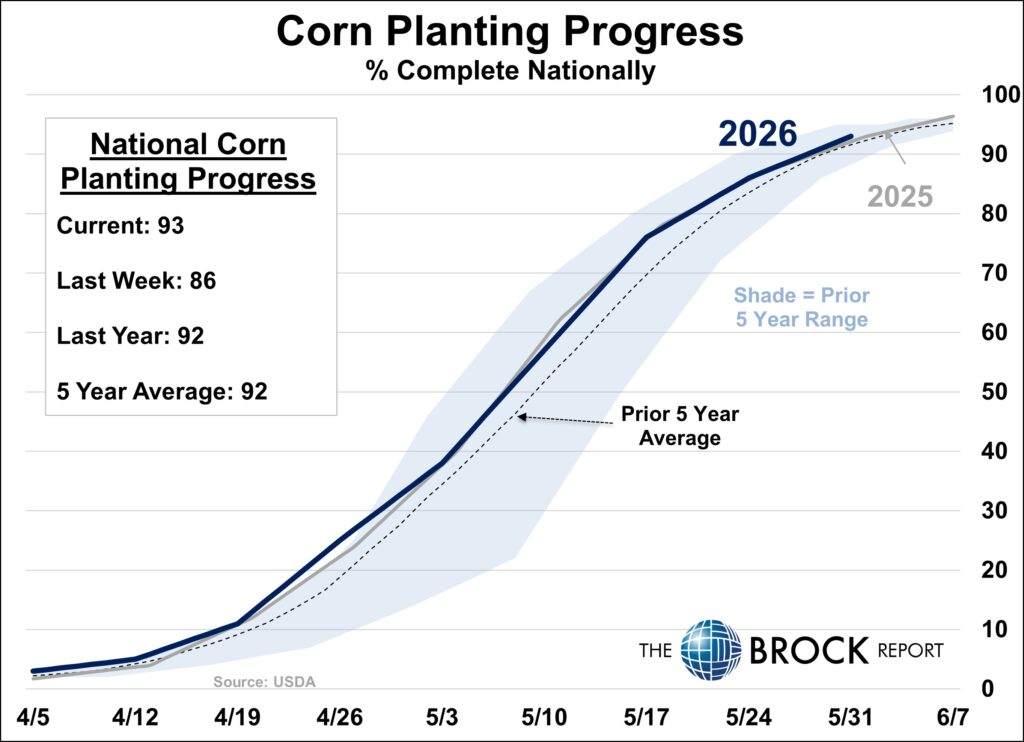
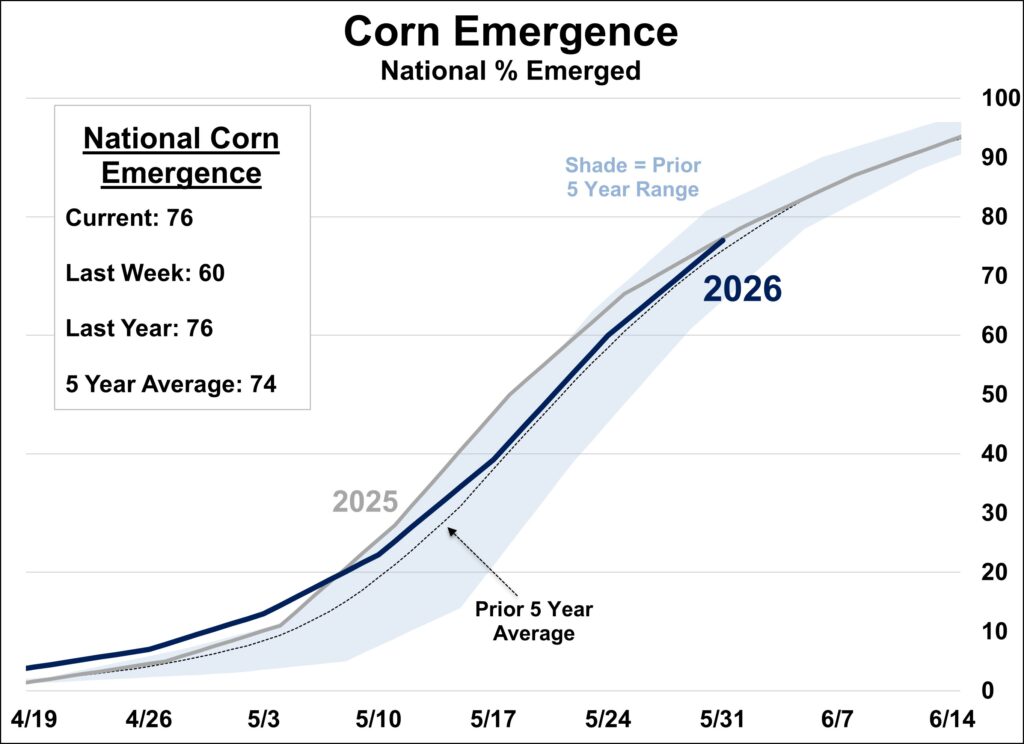
Corn planting reached 93% complete as of May 31, with emergence advancing to 76%. The USDA’s first corn condition rating of the season came in at 67% good-to-excellent, down from 69% last year and below the five-year average of 71%. Conditions are generally strongest across the Upper Midwest, including Iowa and Minnesota, while portions of Kansas, Texas, and Ohio are showing more stress. Overall, the crop is off to a solid start, though early ratings suggest conditions are not quite as favorable as those seen at this time a year ago.
Soybeans
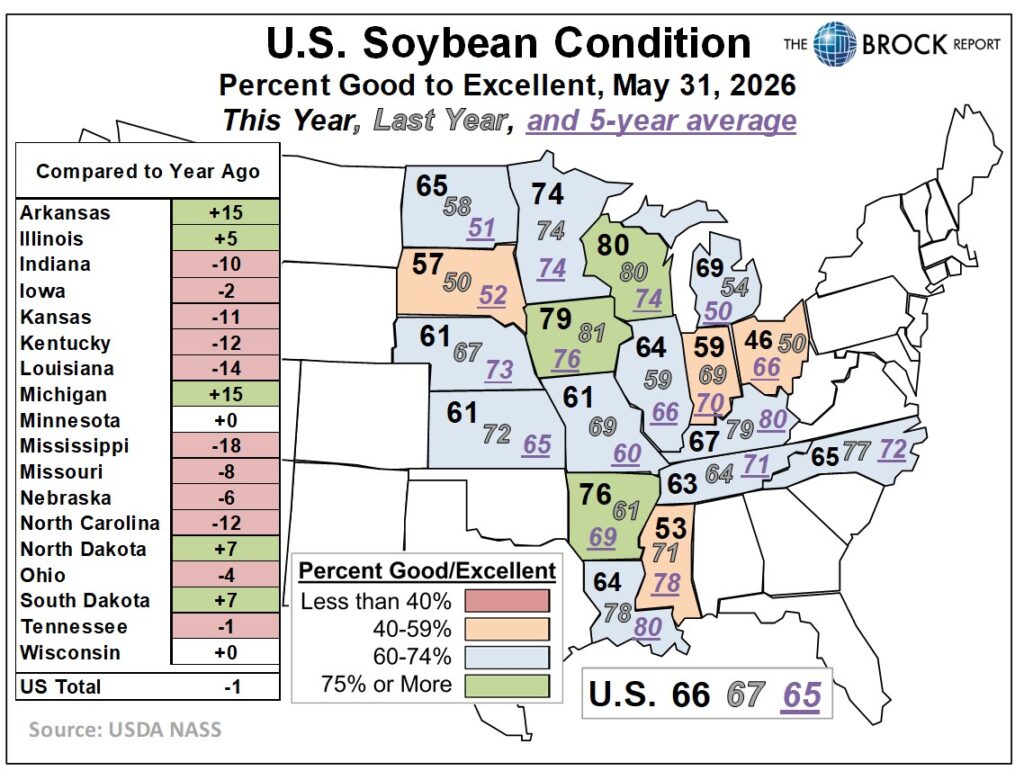
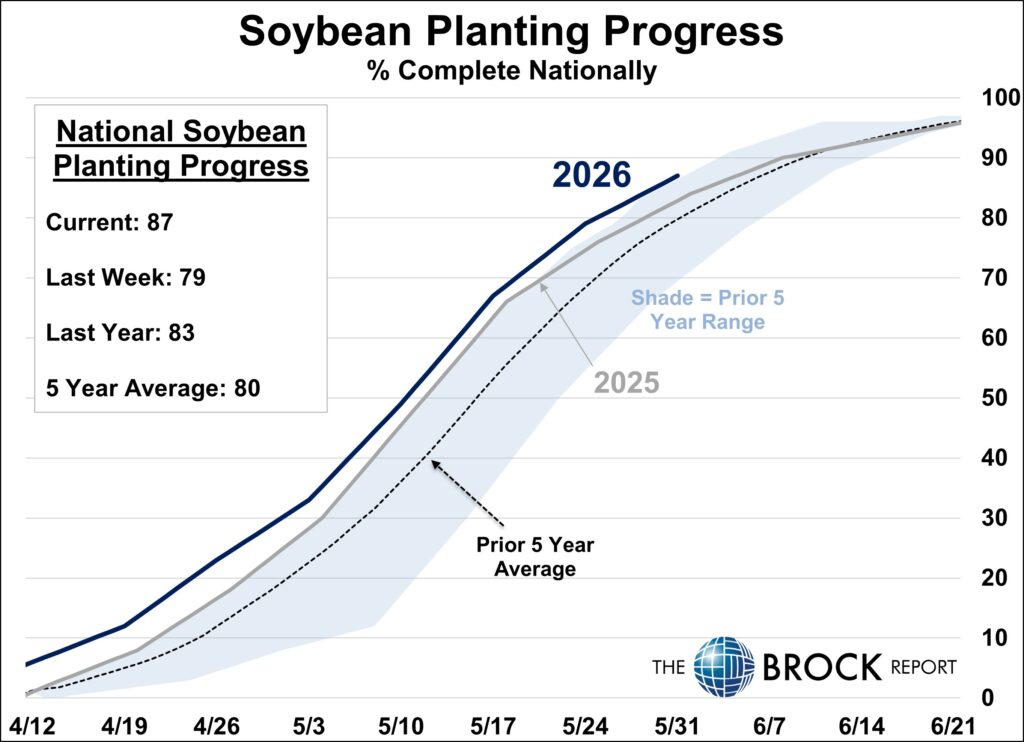
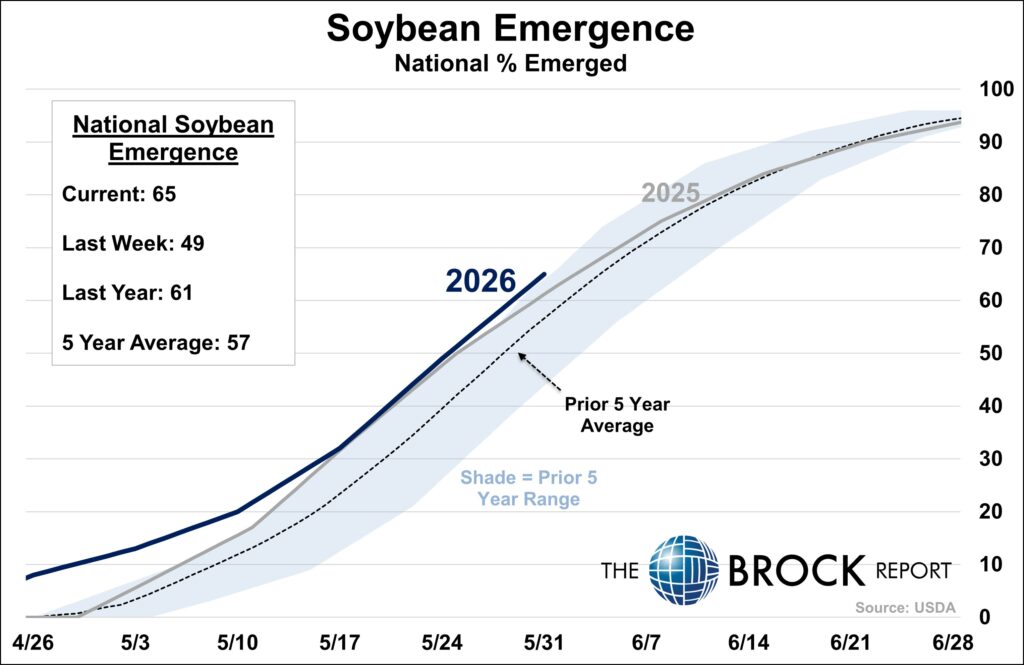
Soybean planting advanced to 87% complete, while emergence reached 65%, both ahead of last year and the five-year average. Planting progress remains particularly strong across much of the western Corn Belt and Mid-South, with several states running ahead of normal pace. Favorable planting conditions throughout May have allowed producers to make rapid progress, leaving the soybean crop well-positioned entering the critical early development stages.
Wheat
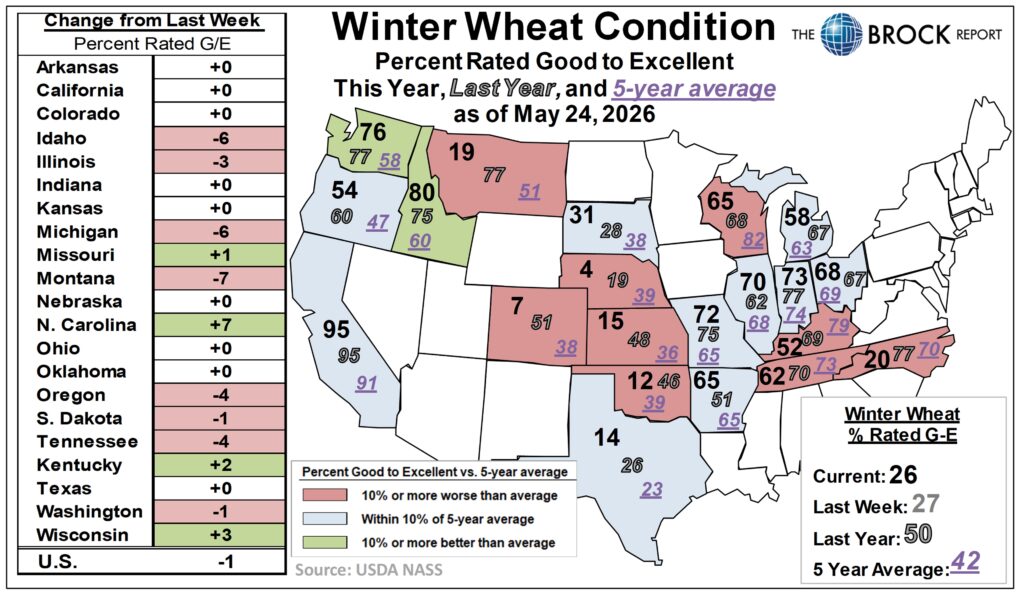
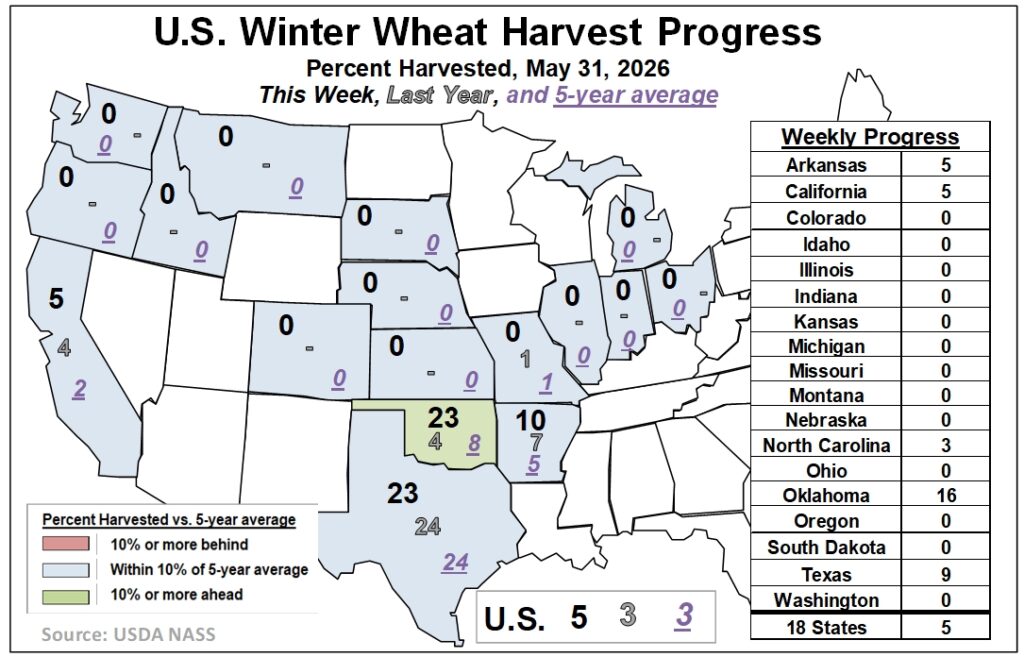
Winter wheat harvest officially got underway this week, with USDA reporting 5% of the crop harvested nationally, ahead of both last year’s 3% pace and the five-year average of 2%. The report also showed winter wheat conditions unchanged from the previous week at 26% good-to-excellent, dramatically below last year’s 52% and the five-year average of 43%. Poor crop ratings continue to be concentrated across the Southern Plains, including Kansas, Oklahoma, and Texas, while the Pacific Northwest remains one of the few regions reporting conditions well above historical norms. With harvest now beginning, yield reports from the Southern Plains will become increasingly important in assessing production potential.
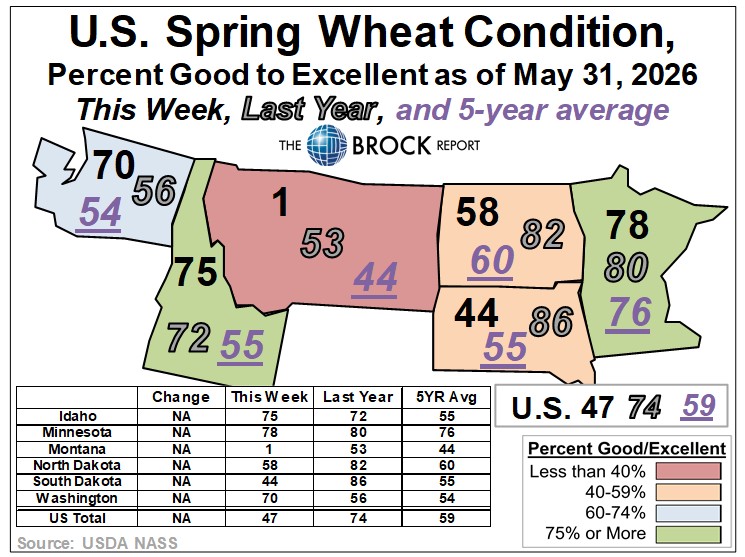
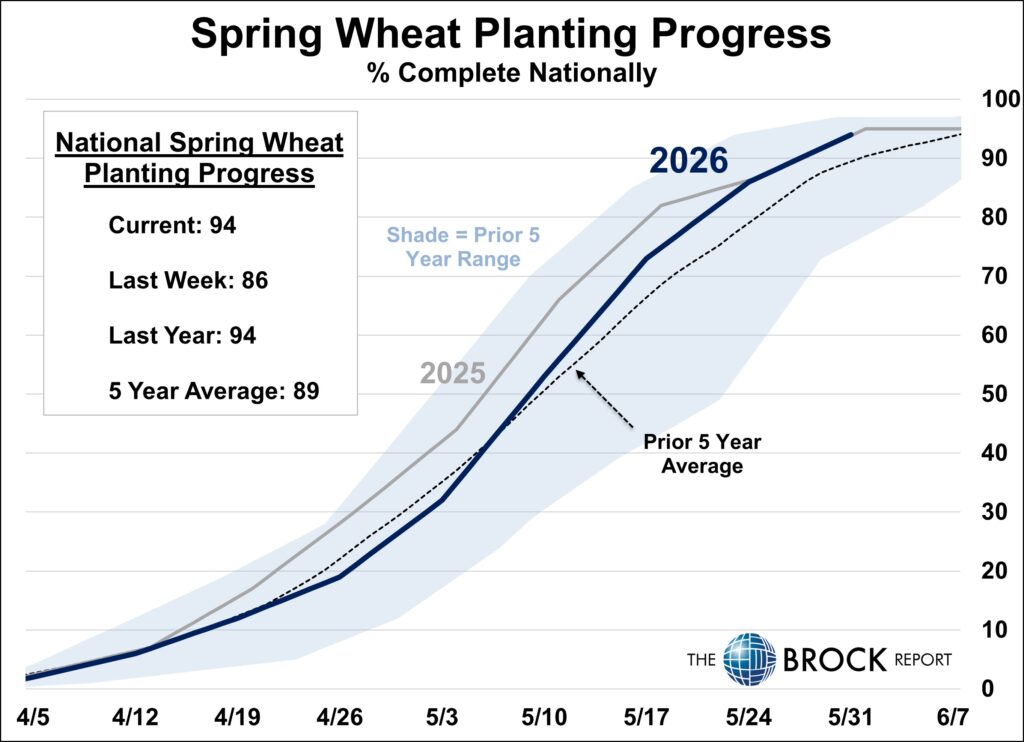
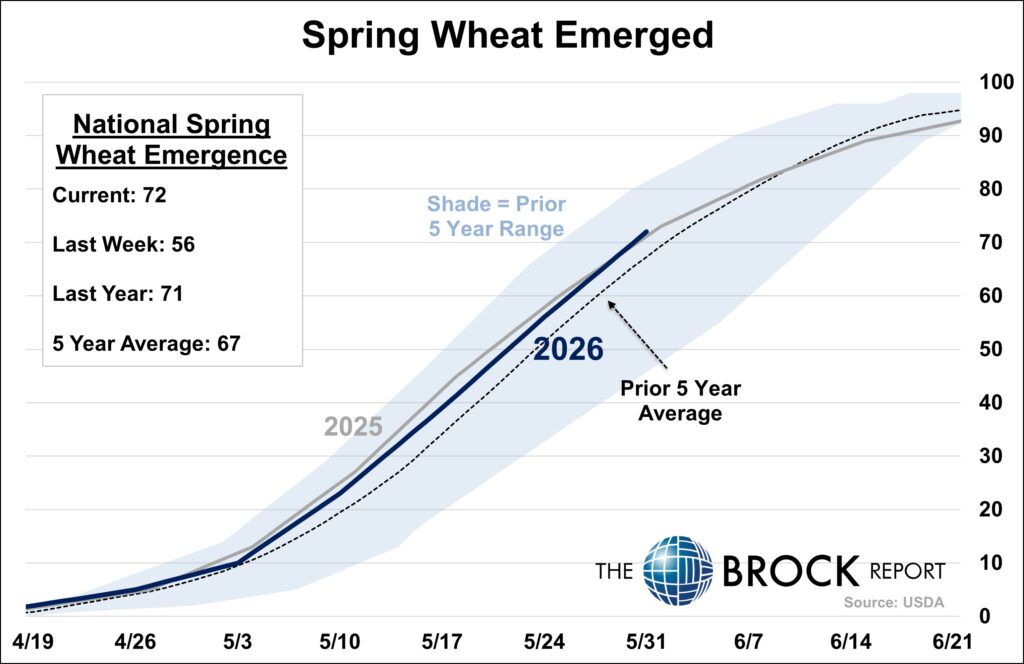
Spring wheat planting reached 94% complete and emergence advanced to 72%, both near normal for this time of year. However, crop prospects across the Northern Plains remain mixed, with persistent dryness continuing to pressure production areas. Montana’s wheat conditions remain particularly poor, while North Dakota and South Dakota are also struggling relative to historical norms. As the crop moves into its key growth stages, upcoming precipitation across the Northern Plains will be critical in determining yield potential.
Cotton
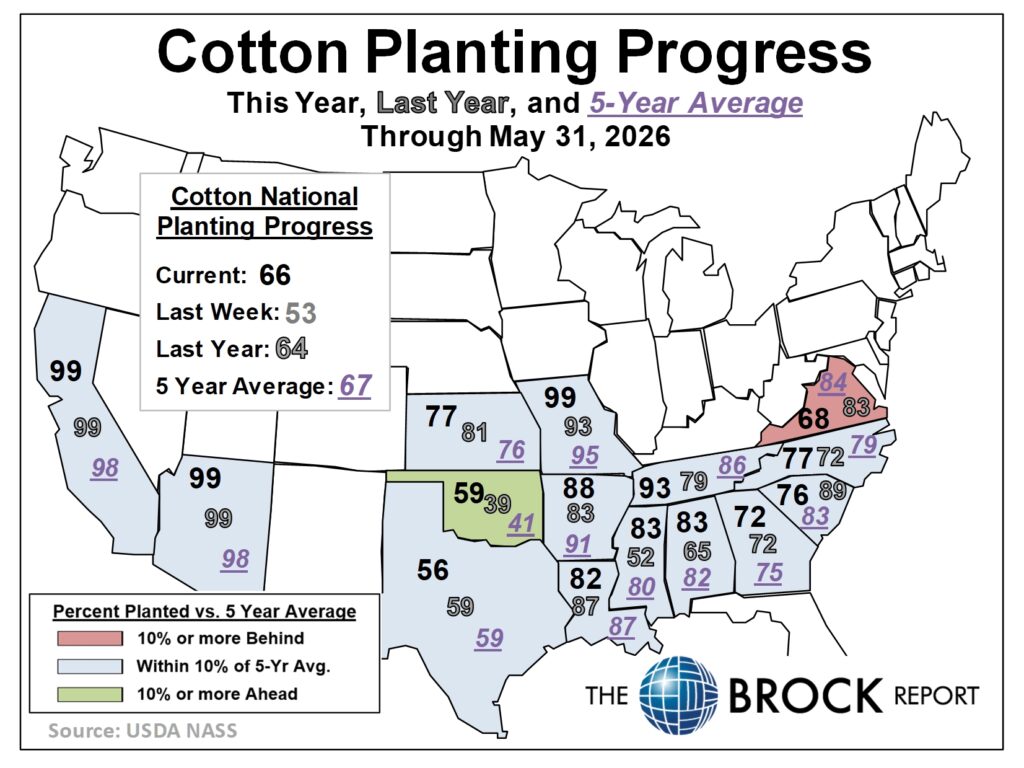
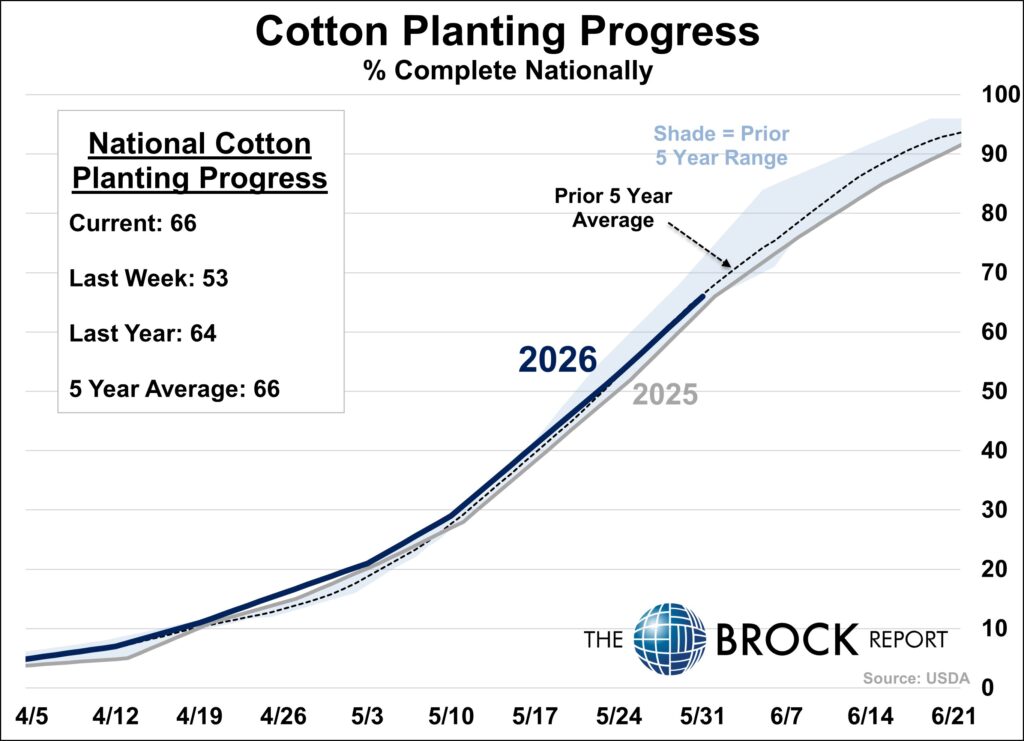
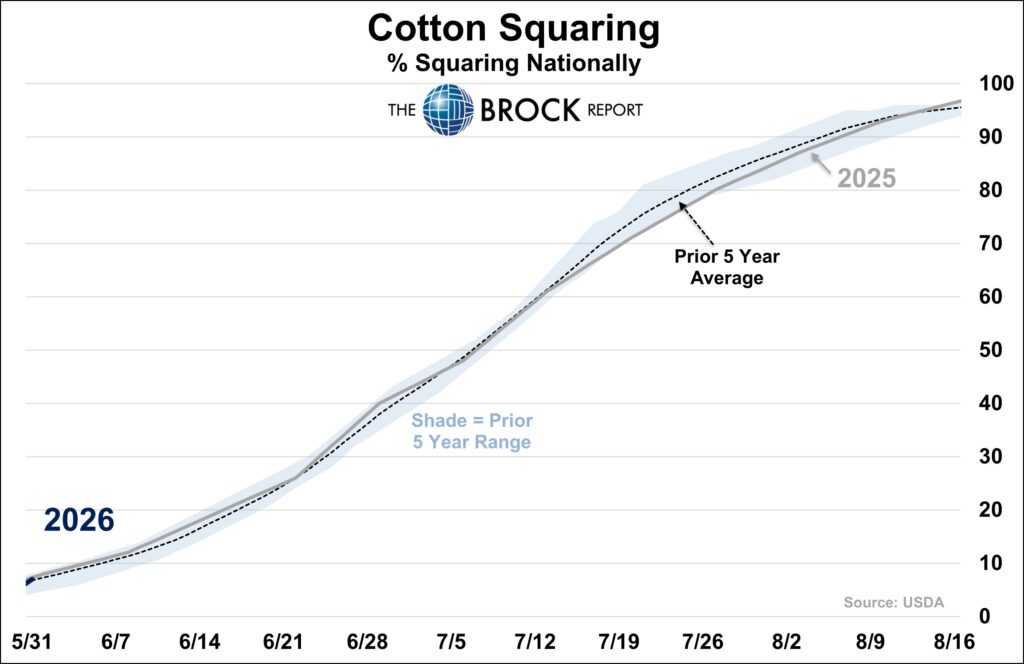
Cotton planting advanced to 66% complete nationally, nearly matching both last year and the five-year average, while squaring activity has just begun across southern growing regions. Progress remains mixed geographically, with Oklahoma running well ahead of normal while parts of the Southeast continue to lag. Overall, planting remains close to historical pace and does not currently present any significant concerns for the market.
Rice
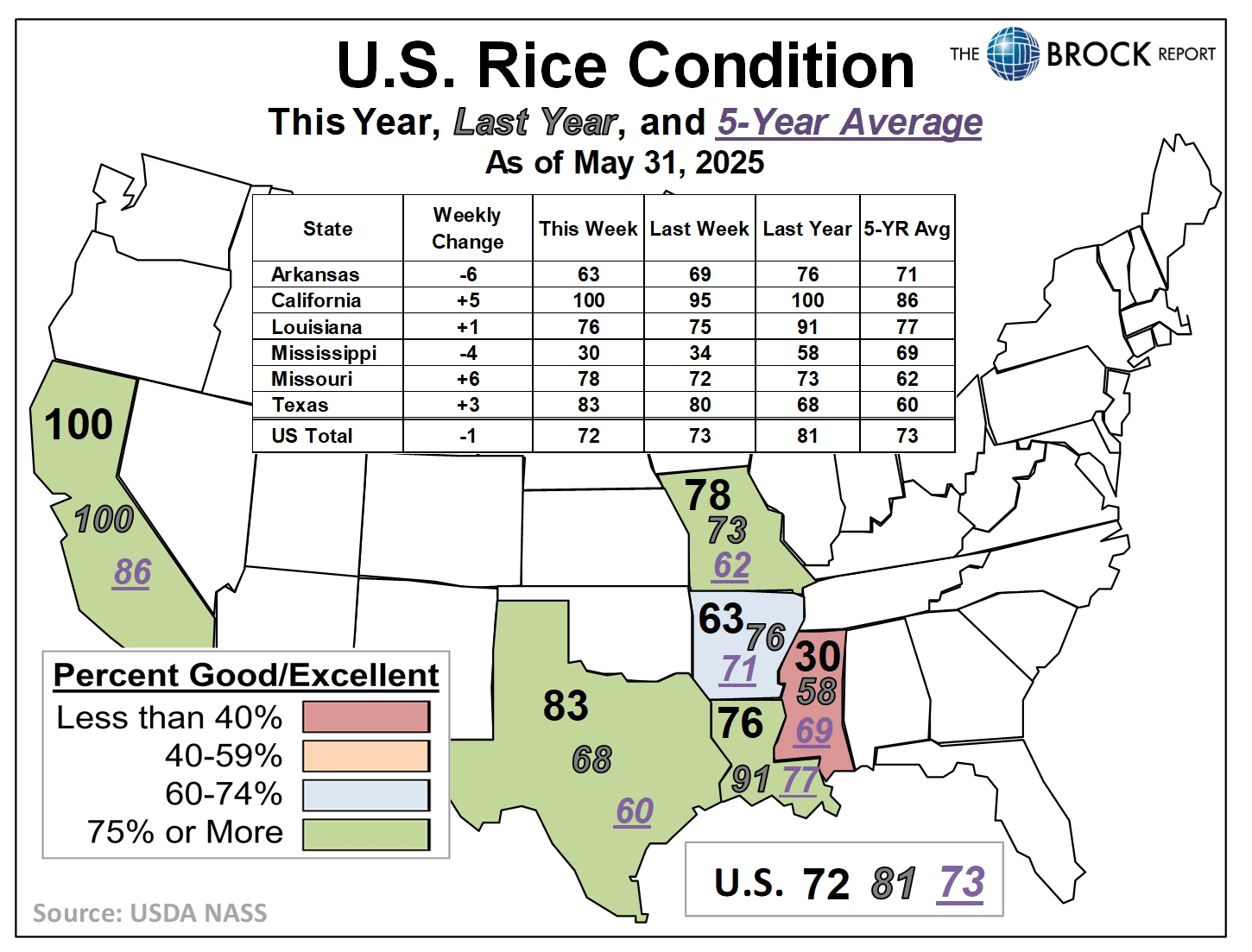
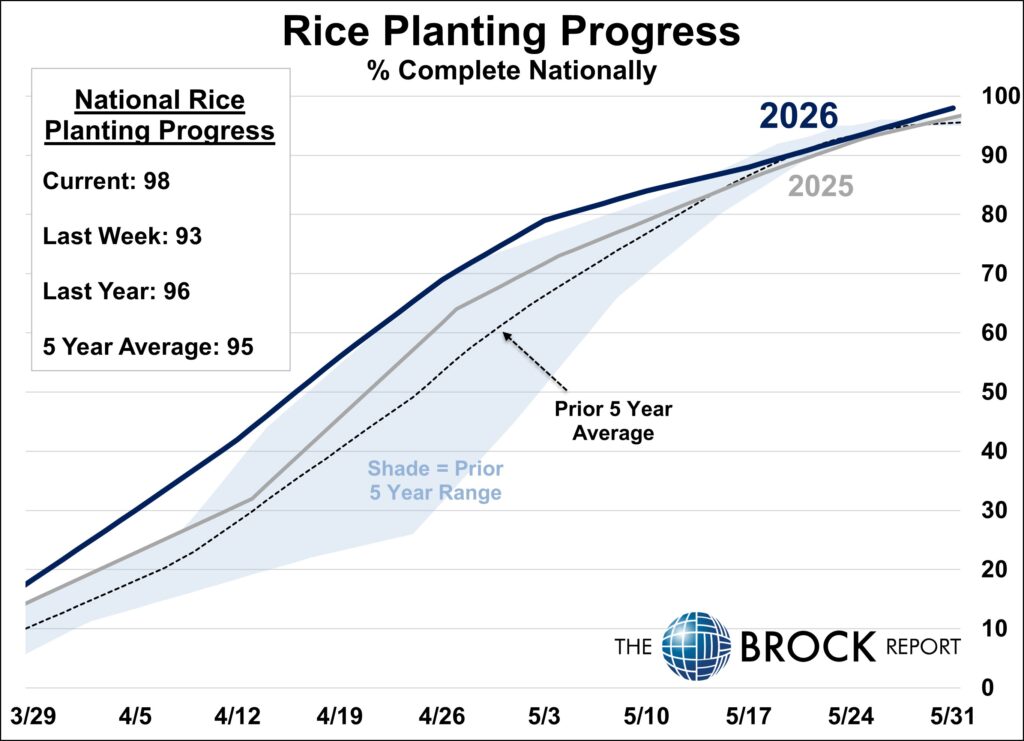
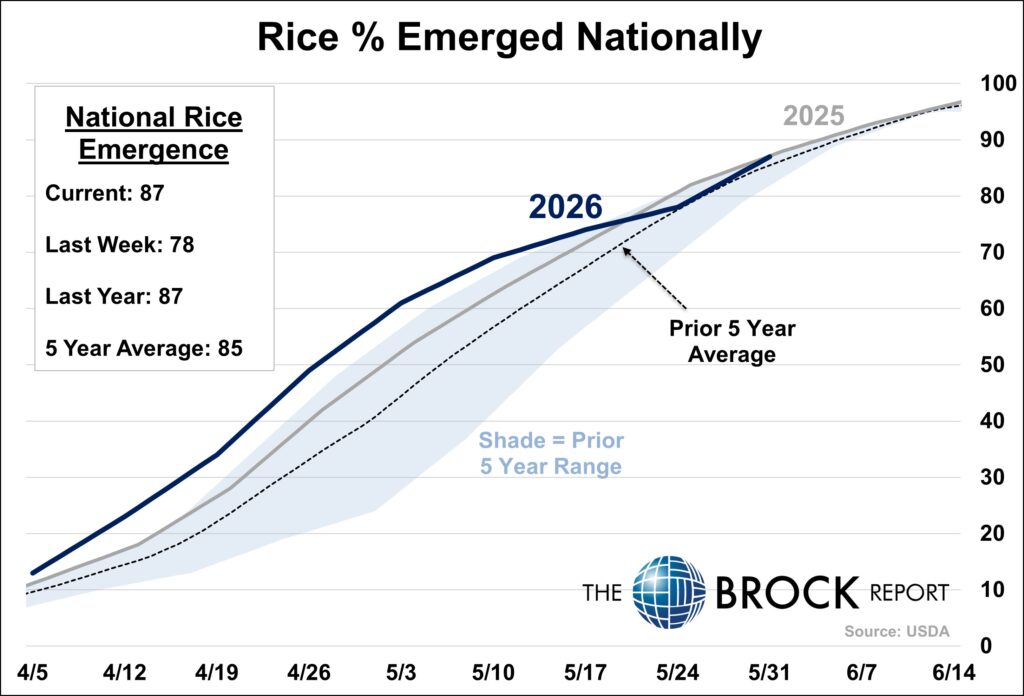
Rice planting reached 98% complete and emergence advanced to 87%, both slightly ahead of historical averages. The rice crop was rated 72% good-to-excellent this week, compared to 81% last year and 73% for the five-year average. Conditions remain highly variable by state, with strong ratings in California, Texas, Missouri, and Louisiana offsetting weaker conditions in Mississippi and Arkansas. While the initial rating is below year-ago levels, it remains generally consistent with longer-term averages as the crop enters the summer growing season.
Drought Monitor and Weekly Precipitation Forecast
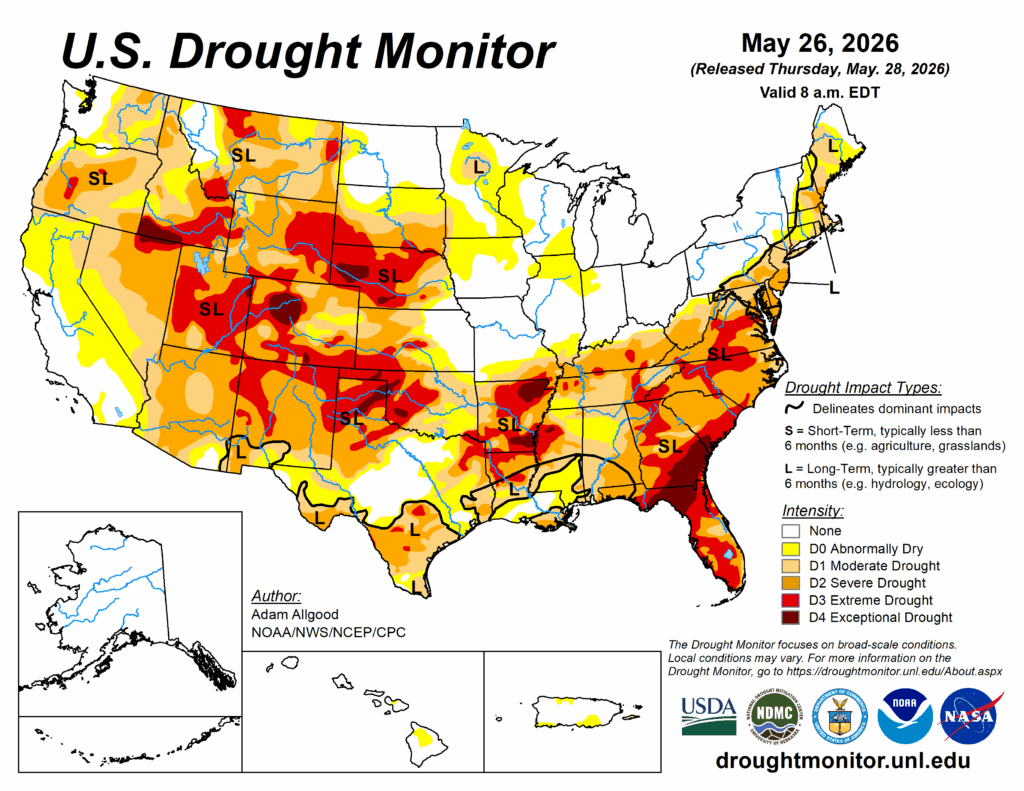
Source: https://droughtmonitor.unl.edu