Corn
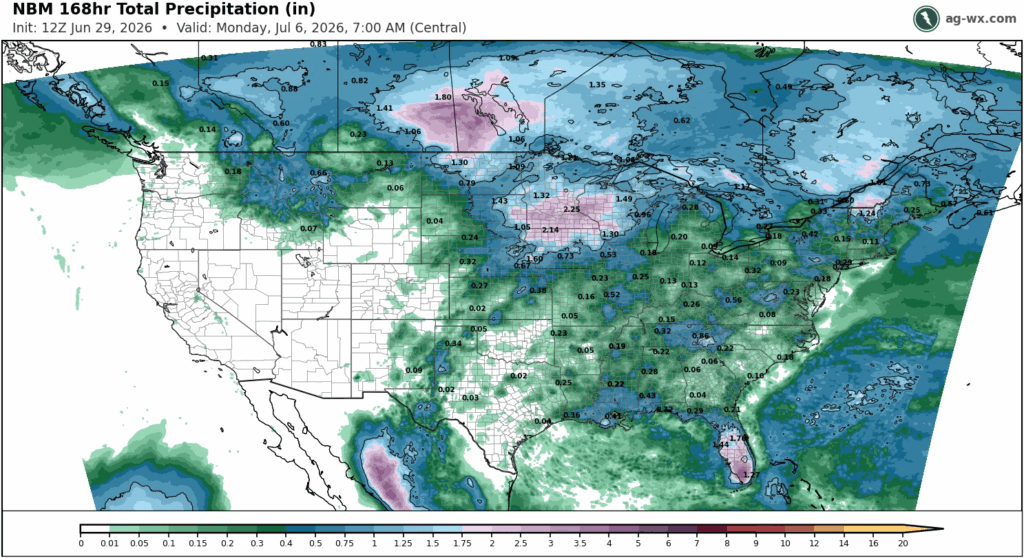
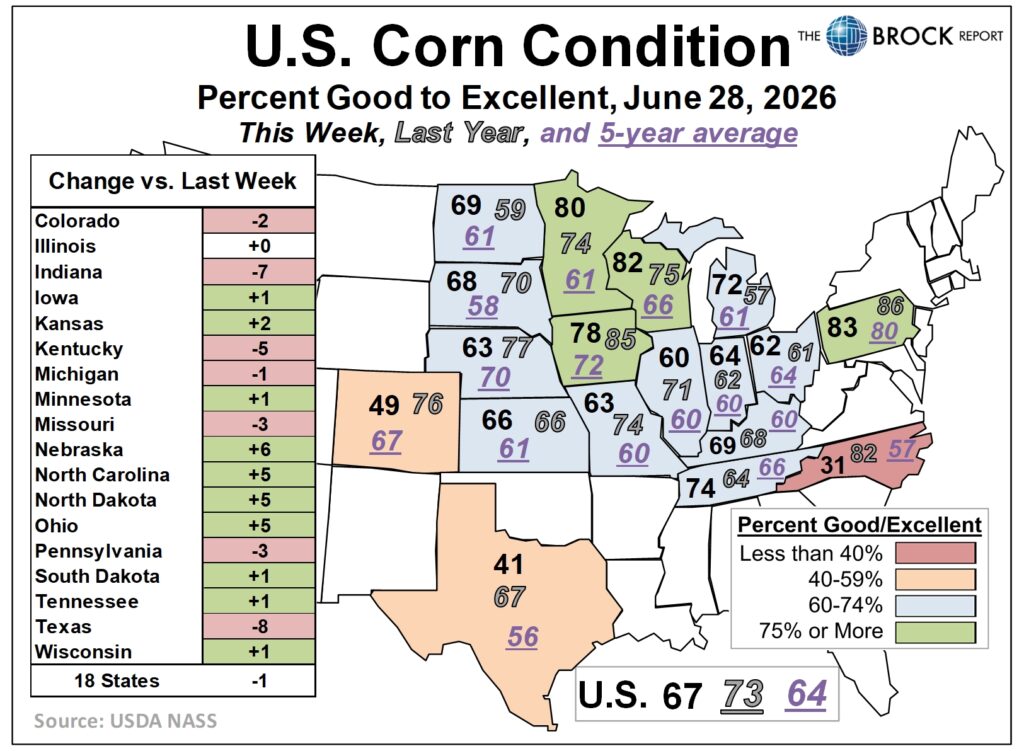
U.S. national corn conditions declined 1 percentage point in the week ending June 28, with the national good-to-excellent rating slipping to 67%. The average rating across the 18 major corn-producing states breaks down as follows: very poor (2%), poor (6%), fair (25%), good (53%), and excellent (14%). Overall, crop conditions across the northern Corn Belt remain favorable, while excessive moisture continues to be a concern across portions of the southern Corn Belt. Market participants appear comfortable that recent rainfall has been sufficient to offset the intense heat forecast over the next week. In particular, drier areas of northern Iowa and southern Minnesota are expected to receive 1.0 to 2.25 inches of rainfall over the next seven days (See precipitation forecast at the bottom of the page), which should help crops withstand the upcoming heat without significant stress.
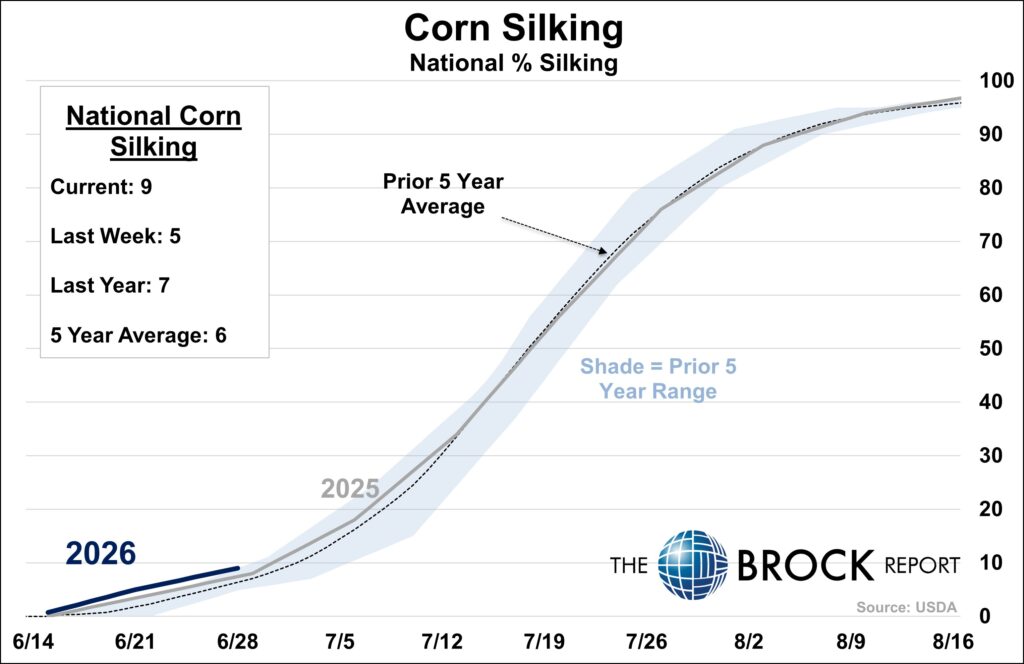
The USDA also discontinued reporting corn emergence this week and released its second corn silking update of the season, with silking reaching 9% nationally. To date, meaningful silking progress has largely been confined to areas south of a line stretching from Kansas to Kentucky, with little reproductive development occurring farther north.
Soybeans
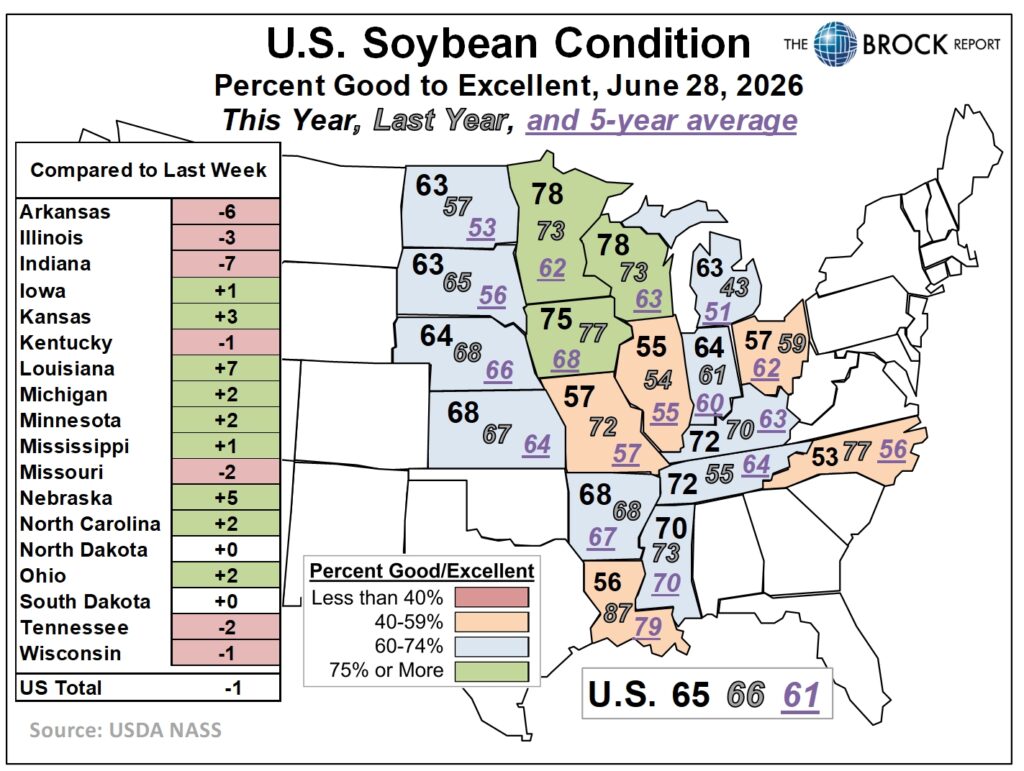
National soybean conditions also declined by 1 percentage point this week, with the national good-to-excellent rating falling to 65%. Much of the deterioration was concentrated in Indiana, where both corn and soybean conditions declined by 7 percentage points on the week.
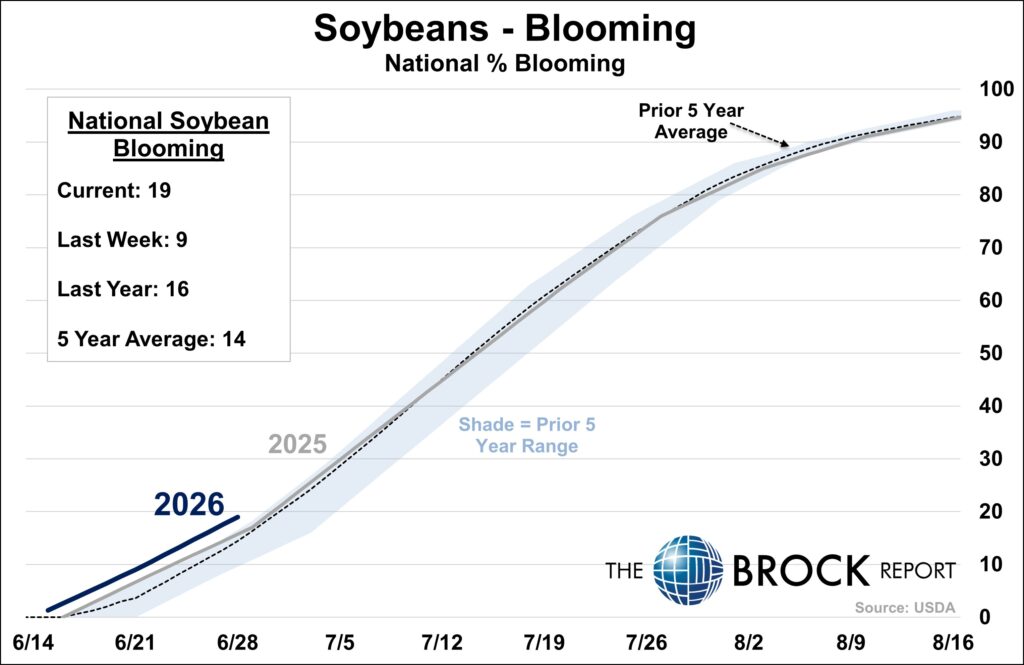
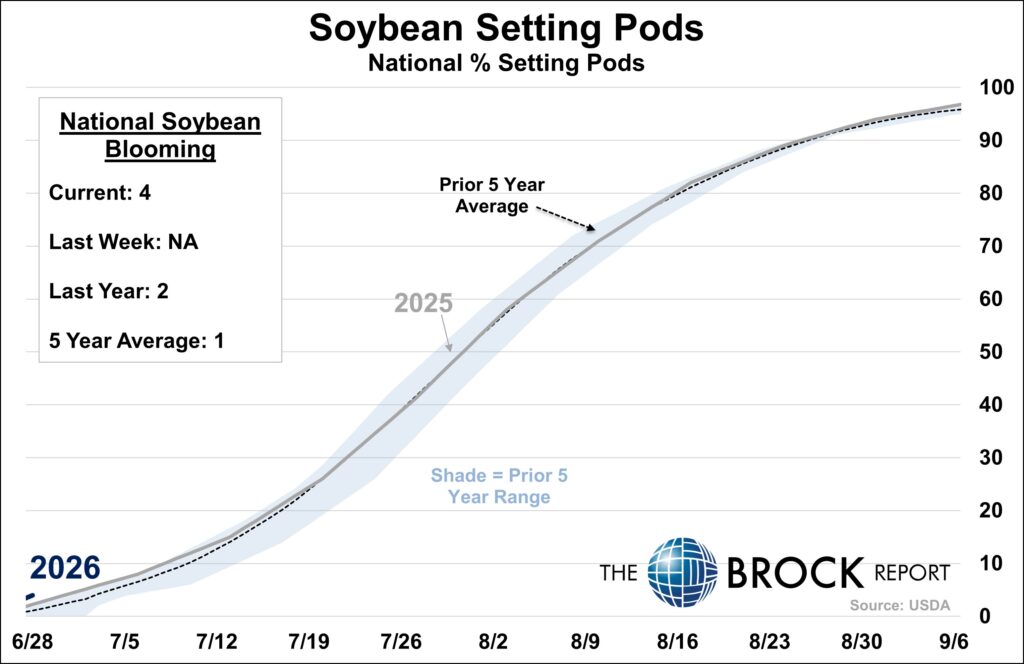
The USDA released its first soybean pod-setting report of the season, with 4% of the U.S. crop now setting pods. National soybean blooming progress advanced to 19%, reflecting continued development across the southern and central portions of the soybean belt.
Wheat
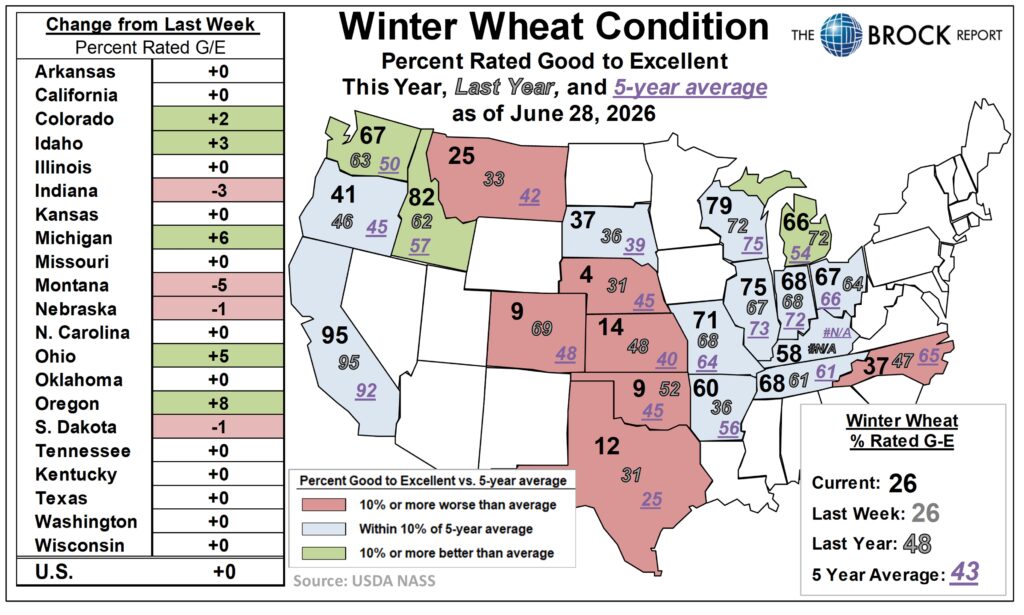
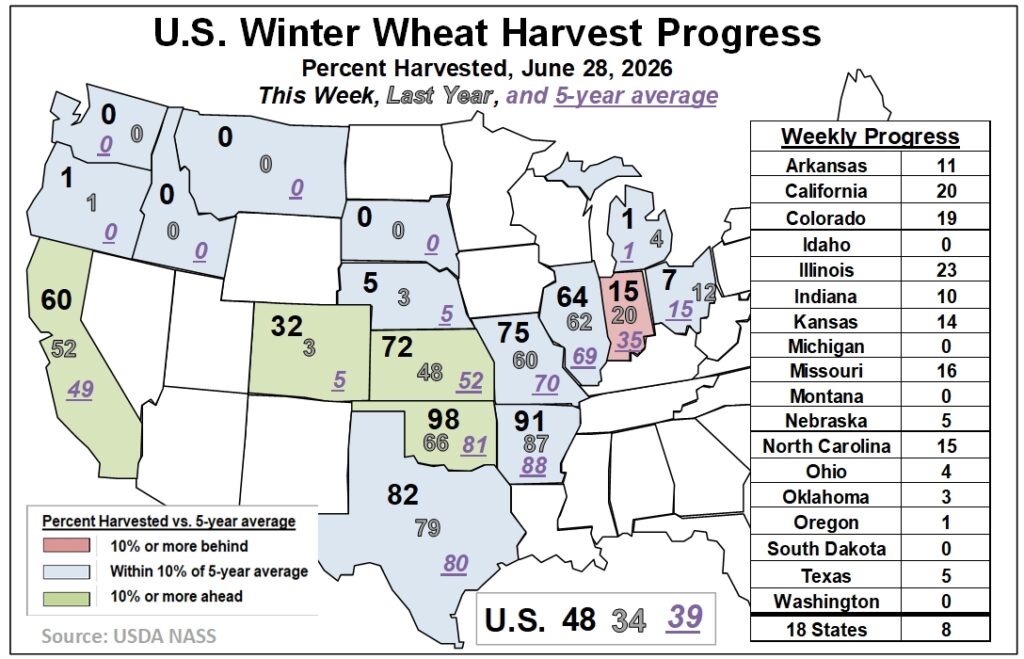
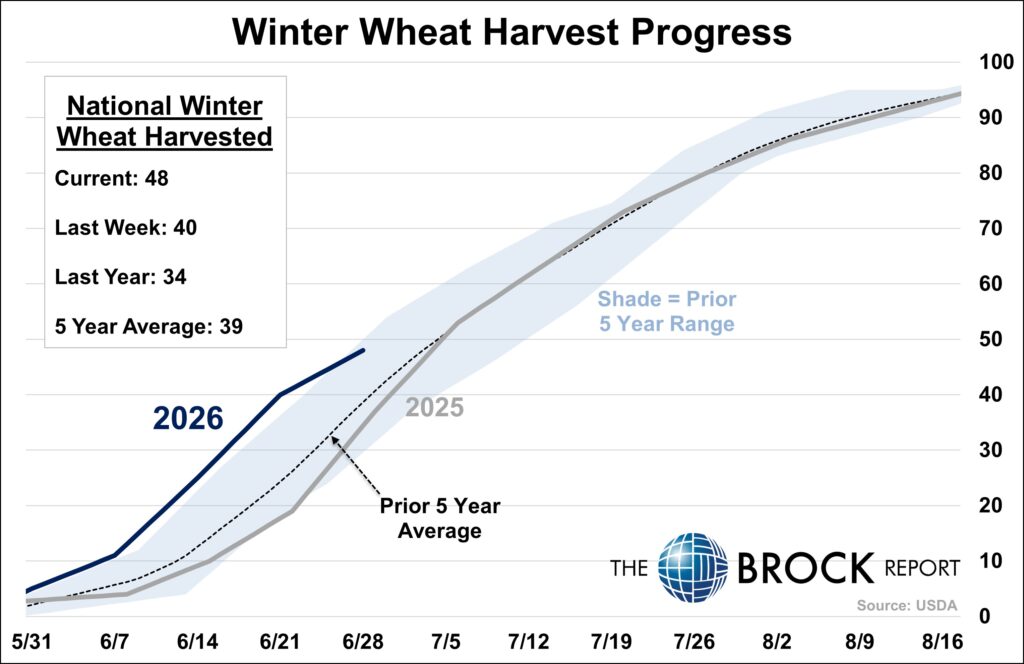
National winter wheat conditions were unchanged this week, with very little movement across the major production states we monitor. Harvest progress slowed somewhat during the past week, likely due to scattered precipitation across portions of the central Plains. Even with the slower pace, harvest remains well ahead of the five-year average, reflecting the early maturity seen across much of the crop this season.
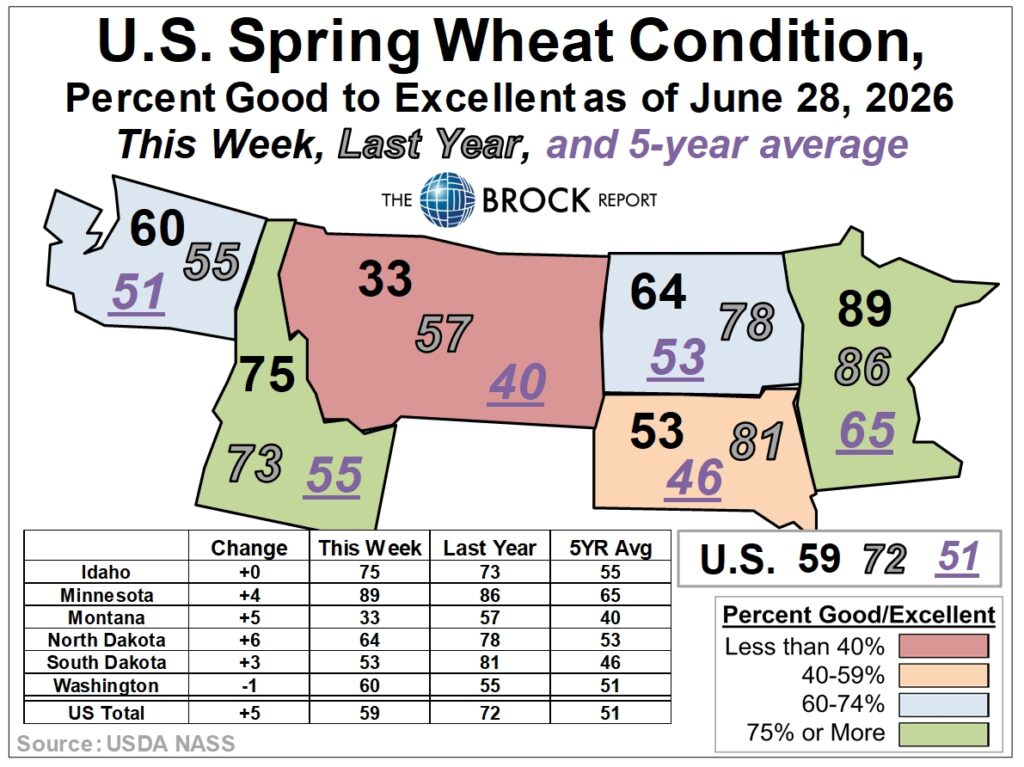
National spring wheat conditions improved another 5 percentage points this week, with the U.S. crop now rated 59% good-to-excellent, above the five-year average of 51% but still below last year’s 72%. Improvements were widespread across the Northern Plains, led by North Dakota, Montana, and Minnesota.
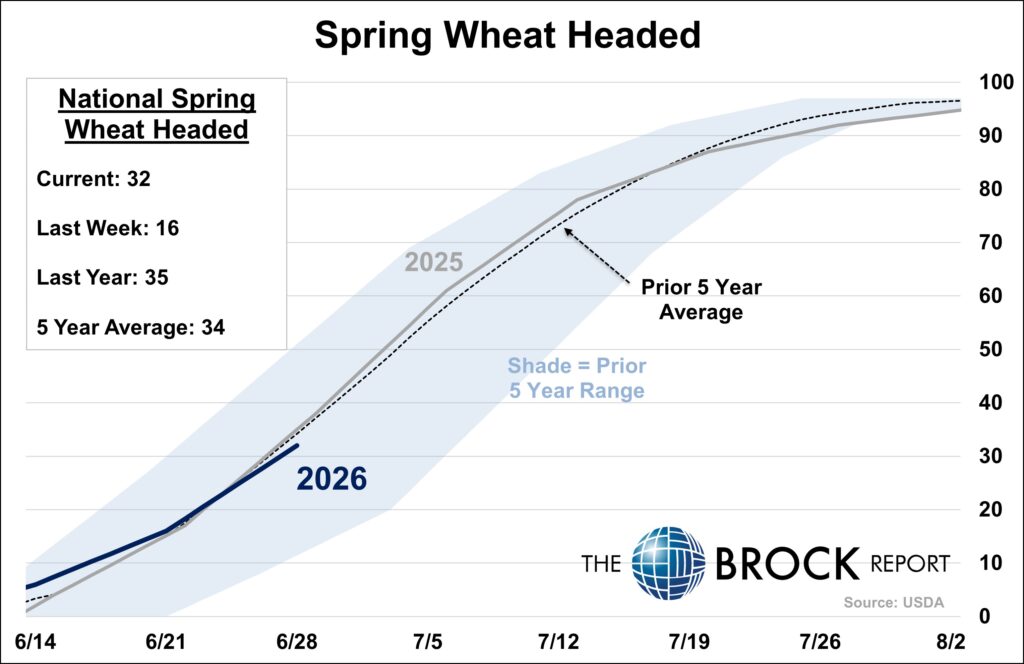
National spring wheat heading reached 32%, slightly behind both last year (35%) and the five-year average (34%). As more of the crop enters heading, weather across the Northern Plains over the next several weeks will be critical in determining final yield potential.
Cotton
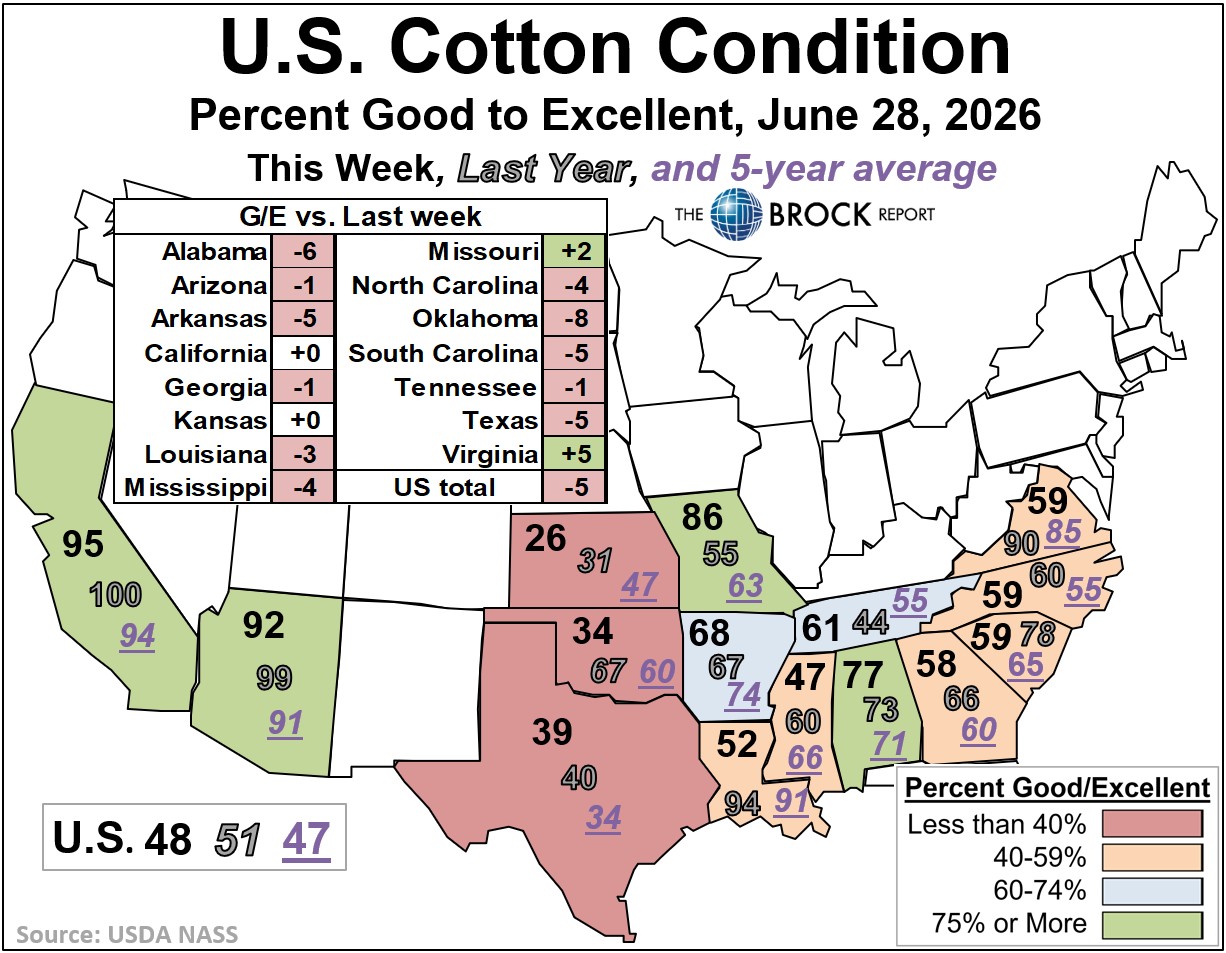
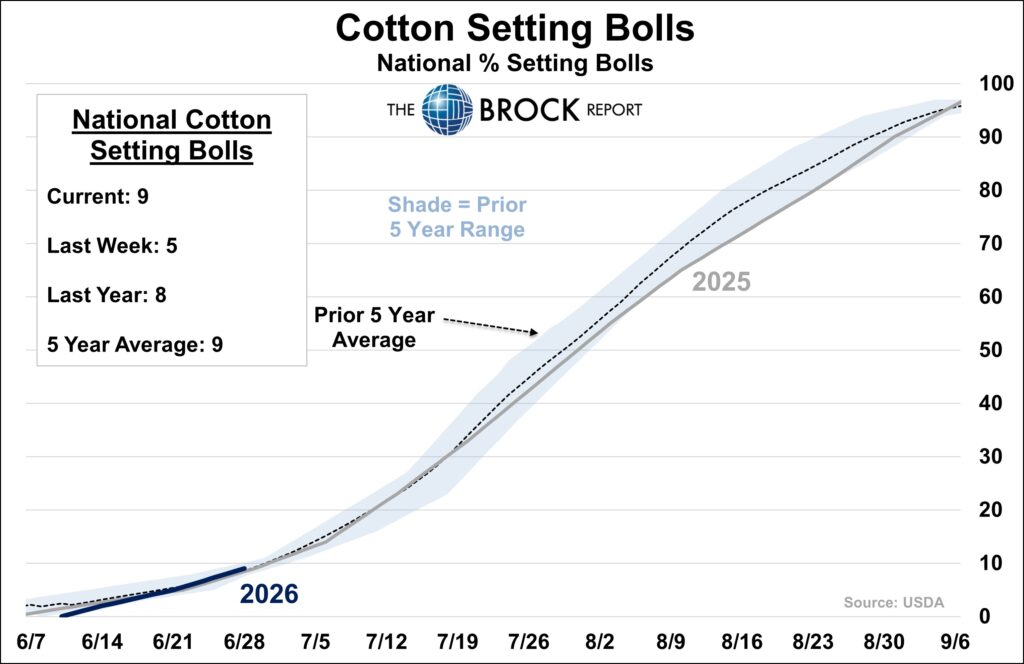
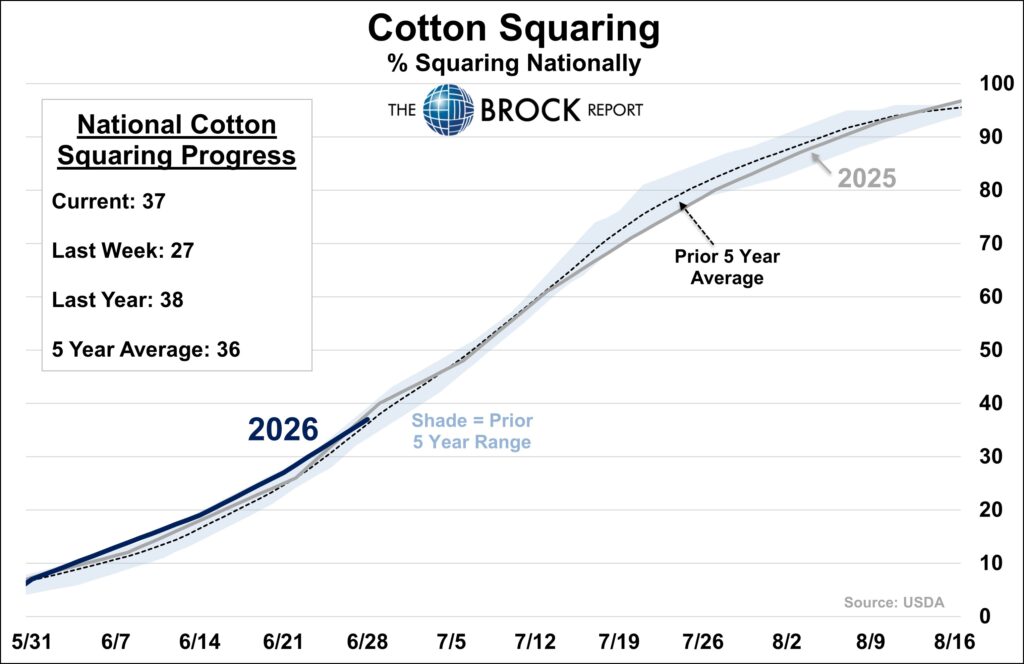
National cotton conditions declined 5 percentage points this week, with the U.S. crop now rated 48% good-to-excellent. Most of the states we track also saw week-over-week declines in condition ratings, led by Oklahoma (-8), Alabama (-6), Arkansas (-5), and Texas (-5). Despite the deterioration in crop conditions, development remains near normal, with 37% of the crop squaring and 9% setting bolls, both in line with historical averages
Rice
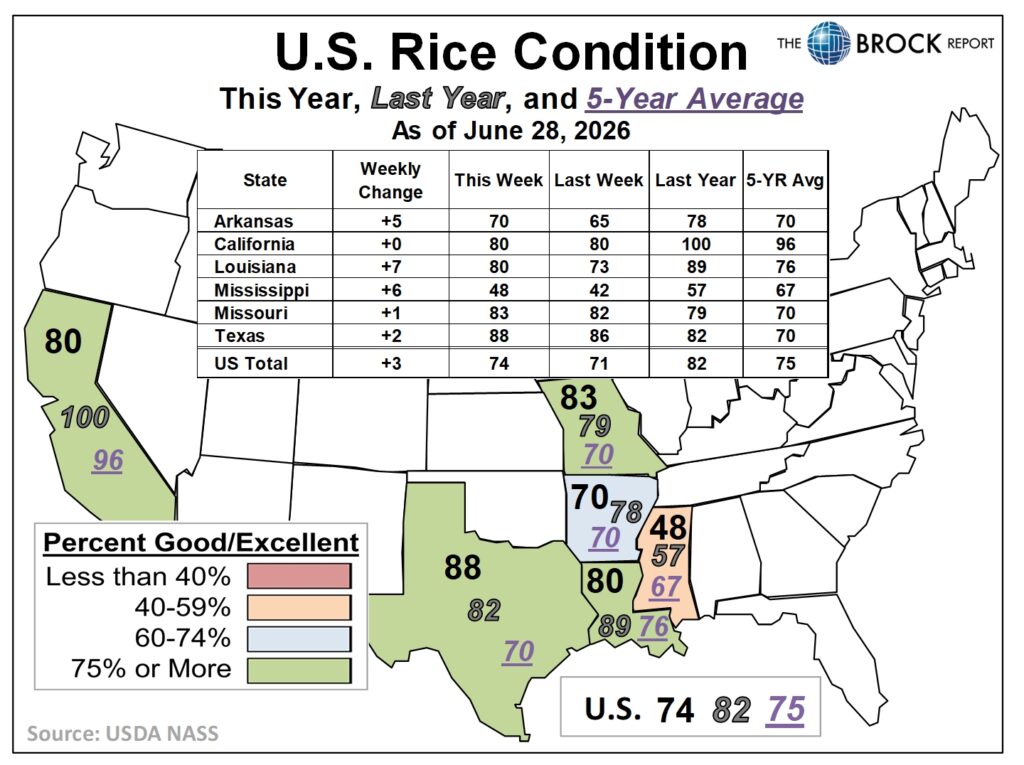
National rice conditions improved 3 percentage points this week, with the U.S. crop now rated 74% good-to-excellent. Improvements were widespread across the major producing states, led by Louisiana (+7), Mississippi (+6), and Arkansas (+5). Despite this week’s improvement, national conditions remain below both last year’s 82% rating and the five-year average of 75%. Texas and Missouri continue to boast the strongest crop conditions, while Mississippi remains the primary area of concern.
Drought Monitor and Weekly Precipitation Forecast
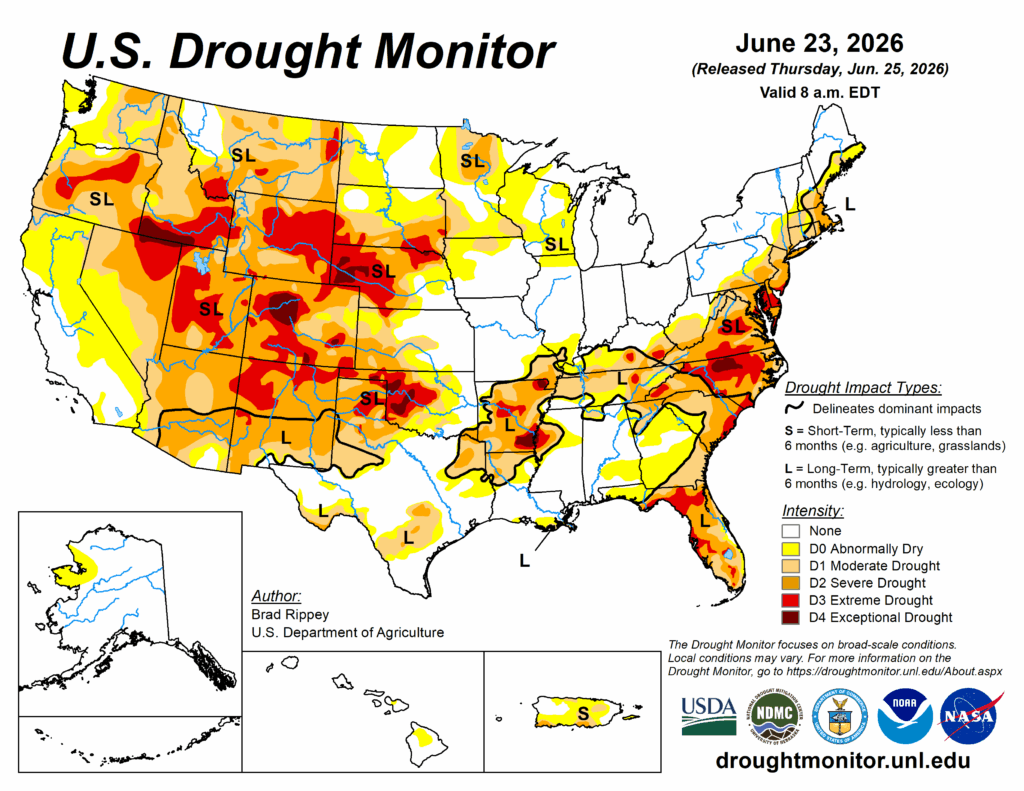
Source: https://droughtmonitor.unl.edu