LEADING OFF: Grain and oilseed futures are mixed: At the morning break, corn is up 1 cent, while soybeans are down 2 to 3 cents and wheat is up 2 to 3. Pessimism about Chinese demand hangs over the soybean complex, while wheat and cotton have been supported this week by the hot and dry conditions in the southern Plains, which are intensifying this week and spread across much of the South. After surging the past couple of days, cotton is down 20 to 30 points this morning.
In outside markets, gold is down more than $100 and the dollar index is up 0.25% as investors await today’s Fed announcement, which will be more notable for the guidance the Fed provides going forward than it’s almost certain decision to keep interest rates steady. U.S. equity futures indexes are pointed lower. Crude oil is up by more than a dollar, with support from fresh attacks on energy infrastructure in the Middle East.
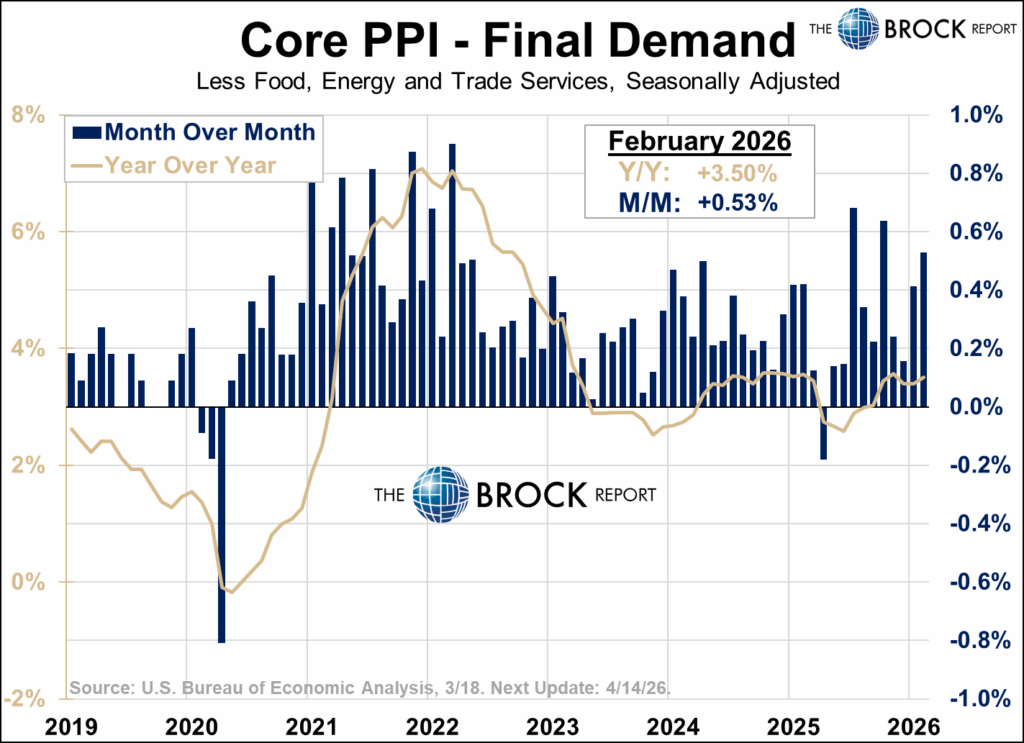
Ahead of the Fed’s interest rate decision and policy announcement this afternoon at 1 p.m. CT, the Producer Price Index shows inflation remaining an issue even ahead of the war with Iran. The PPI for February was up 0.7% from the prior month, compared to the average analyst estimate of 0.3%. Year-over-year it is up 3.4%. “Core” PPI, which excludes food and energy, was up 0.5%, also above expectations, and 3.9% year-over-year. It’s the latest data point indicating that whatever concern there may be about the job market and slowing growth, “sticky” inflation and the war with Iran is likely to prevent any Fed rate cuts in the near-future.
Israel today says it has killed another top member of Iran’s regime, in this case its intelligence minister, who it said played a significant role in Tehran’s brutal crackdown on recent protests against the regime. Meanwhile the Wall Street Journal reports that neighboring Gulf states such as United Arab Emirates, which had been courting Iran prior to the war, now say that Iran’s regime must be crippled before the war can be ended.
Also this morning, Israel struck Iran’s largest natural gas facility, a reminder of how the war is affecting many other resources besides crude oil. Malaysian fertilizer manufacturers, including Union Harvest and FGV Fertiliser, have suspended new orders due to Middle East conflict-driven supply chain disruptions, Reuters reports. Feedstock shortages and the near-closure of the Strait of Hormuz have caused raw material prices to surge by up to 150% in two weeks. These increases threaten palm oil producers in Malaysia and Indonesia, as fertilizer constitutes over half of their production costs. Suppliers are currently revising prices to manage rising expenses. Pre-orders have been stopped to prevent speculation.
CORN: Argentina’s corn harvest is underway, and with heavy rains recently in southern areas and widespread rains expected over the next week, there is some concern about sluggish fieldwork and, potentially, quality declines. But recent rains have improved the outlook for crops that weren’t already maturing.
Conditions in Brazil look mostly benign, with the only issue being dryness in southern Brazil. Safrinha corn planting is nearly done, and for crops in the ground, the rains are welcome and help ease concern about the dryness threat after the rainy season ends. The ample rains in much of the country paired with dryness in the south is “classic La Nina” according to World Weather, and the pattern will continue a little while longer.
SOYBEANS: Brazil’s ag minister said that Brazil would send two ministry officials to China next week to negotiate a sanitary protocol in response to China complaints about soybean quality. The announcement comes amid recent complaints by exporters that Brazil’s inspections process had become to stringent in response to the complaints from China. The minister said that Brazil had received complaints from some Chinese soybean buyers due to the presence of weed seeds in shipments, Reuters reported. While these concerns raised the possibility that China was taking steps to curb Brazil imports to open the door to imports from the U.S. as China tries to improve relations with the U.S., the Brazil ag minister, Carlos Favaro, said the dispute did not amount to an embargo by China. “If China had intended to suspend purchases of Brazilian soybeans, it would have suspended them,” he said. “That is not the issue.” Data from Brazil’s ANEC showed that soybean shipping schedule remained little changed from a week ago, and its projection for March soybean exports is at 16.32 MMT, only a slight decline from its estimate last week of 16.47 MMT.
WHEAT: A record-breaking heatwave is gripping the western U.S., and that heat will expand into the Plains over the next couple of days, further stressing hard red winter wheat. Little relief is expected for HRW over the next two weeks, World Weather Inc. says. The heat is also going to add stress and deplete soil moisture in the Pacific Northwest. However, most other key wheat producing areas globally have benign conditions currently, and the prospect of stiff export competition is limiting wheat’s upside. The war in the Middle East remains a wildcard. That is more of a long-term issue, with little impact right now, but the longer the war continues, the greater the chance it spreads, and some countries will likely face issues with rising food prices or fears of shortages.
LIVESTOCK: Live cattle futures were higher for the second straight day Tuesday, climbing $1.50 to $1.975 with nearby months leading the way. April settled at $235.225, June settled at $233.70, and August settled at $231.325. April futures have resistance at $240 before potentially making a run at February highs around $244, while June has potential resistance at $236 and $240. Wholesale beef prices continue to rise, further boosting packer margins and demand expectations. The afternoon Boxed Beef report showed Choice up 65 cents and Select up $2.21.
The cattle complex may be getting some support from the wildfires in Nebraska, where the governor has declared a state of emergency in several counties, which collectively account for 700,000 head of cattle and calves according to DTN. While there are no estimates on actual cattle lost, the fires have destroyed a significant amount of grazing lands. The JBS strike in Greely, Colo. that started Monday has had little apparent impact on the market thus far, but it may have been priced in with recent declines.
Feeder cattle futures also rallied again, gaining $4 to $5 in most contracts Tuesday. Lean hog futures were modestly higher, supported by firm cash prices.