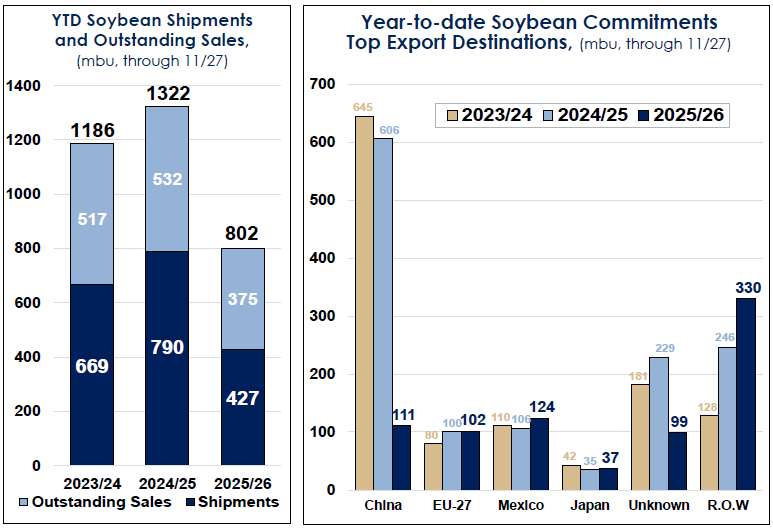
As fast as they rose between mid-October and mid-November, soybean futures have since declined just as fast, largely because despite China’s recent commitment to buy U.S. soybeans, the outlook for 2025/26 exports remains dismal. Based on the most recent export sales and shipments data from USDA, exports are on a pace to fall well short of USDA’s 2025 export projection of 1.635 billion bushels, which is already a decline of 13.1% from last year. Barring a significant counter-seasonal boom in U.S. export sales, USDA’s export forecast seems likely to fall further in coming months.
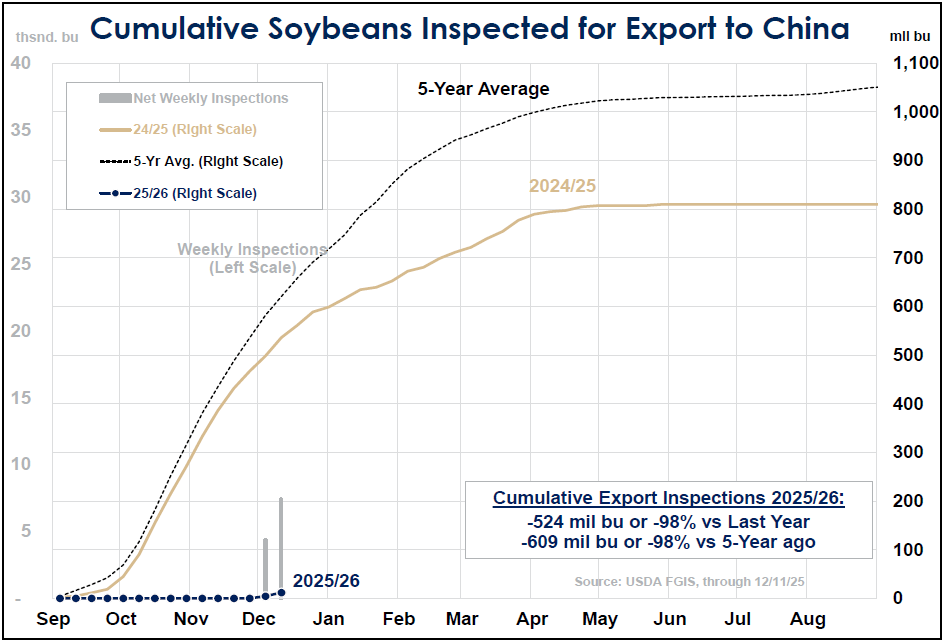
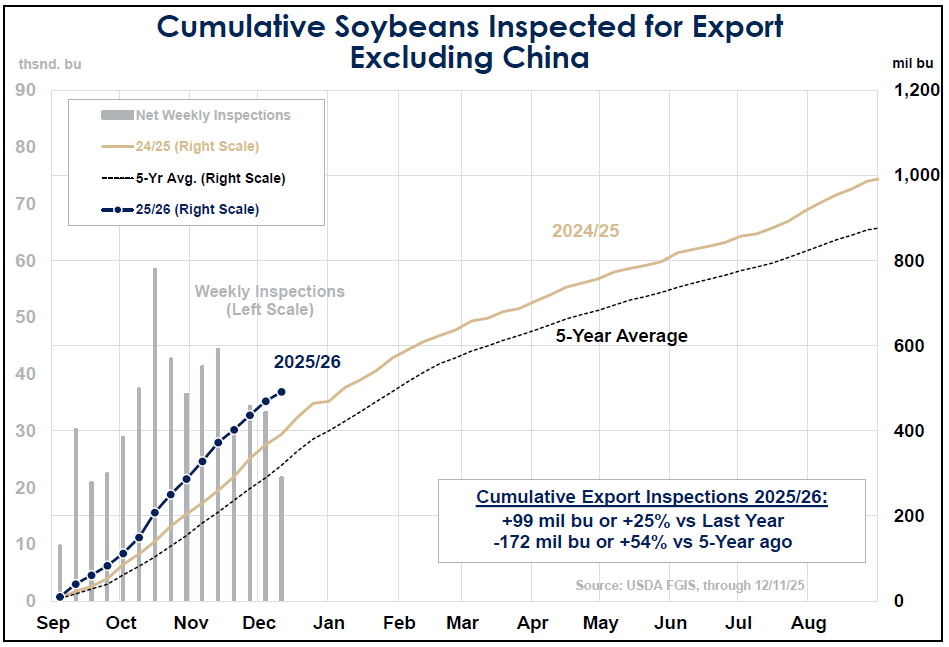
According to USDA export data through Nov. 27, which is two weeks behind, total U.S. soybean export sales commitments for 2025/26 equaled only 53% of USDA’s forecast, while over the prior five years, sales averaged 76% of final exports at the same point in the marketing year. If export sales continue at that pace for the remainder of the year, they will reach only 1.055 billion bushels, 580 million below USDA’s forecast. The pace of USDA-reported shipments through Nov. 27 was not much different, and export inspections data through Dec. 11 indicates things have not improved in December, with inspections running 46% below the five-year average (see chart below). We certainly don’t expect exports to wind up anywhere near as low as that data suggests, but, it’s difficult to see exports reaching 1.600 billlion bushels.
China is actually making good progress toward fulfilling its reported commitment to buy 12 million metric tons (MMT) or 441 million bushels of U.S. soybeans by the end of February. Based on export sales data as of Nov. 27 and USDA daily sales announcements since then, we calculate confirmed Chinese purchases at about 4.6 MMT, but export traders earlier in the week indicated China had already bought more than 7 MMT and said buyers for China’s state-owned trading firms were making further purchases. Recent sales to unknown destination were likely to China.
The issue is what will happen when those politically-motivated purchases have been completed. Private Chinese buyers continue to book new-crop Brazilian soybeans, which are significantly cheaper than U.S. beans when the remaining tariff on U.S. beans is factored in. That’s unlikely to change any time soon, with another huge Brazilian harvest set to start in January. As such, we have no reason to expect significant Chinese purchases of U.S. beans for 2025/26 above 441 million bushels. The U.S. will not be able to make up completely for lost sales to China with increased sales to other nations. Through Nov. 27, export sales to nations other than China were up 106 million bushels, or about 22% versus a year earlier, but sales to traditional major customers the European Union and Japan were little change from last year.